
"6 species"
3000 article(s) found

Planting Environment and species Morphology of Colombian Coffee
The pure taste of Colombian coffee comes from Colombia's natural environment with the most favorable conditions for coffee growth. But beyond that, it is inseparable from the hard work of local growers. In Colombia, coffee cultivation has reached 1.07 million hectares, there are about 302000 coffee plantations in the country, and 30 to 40 per cent of the rural population depends directly on coffee production. Columby

Organ classification of coffee
Coffee is a shallow root crop, and the plants propagated with seeds have conical roots. Root system refers to the general name of root. The root morphological distribution and depth of shade varieties / soil conditions and agricultural technical measures are different. From the point of view of varieties, the roots of small / medium grain species are shallower, while those of large grain species are deeper. Under normal circumstances, there is a thick and short taproot and many well-developed lateral roots. Yunnan small-grain coffee has a 4-year-old fruit.

Introduction of coffee beans from Colombian coffee producing countries that mainly grow small grains of coffee
Species Morphology Colombian Coffee Plant Morphology Colombian Coffee Plant Morphology (10) the varieties of Colombian coffee are mainly small grain coffee. Plants are small trees or large shrubs, 5-8 m tall, usually much branched at base; old branches gray-white, nodes dilated, young branches glabrous, compressed. Leaves thinly leathery, ovate-lanceolate or lanceolate, 6-14 cm long, 3.5-5 cm wide, tip long

The various parts of the coffee plant decompose the shallow root crop of coffee.
Coffee is a shallow root crop, and the plants propagated with seeds have conical roots. Root system refers to the general name of root. The root morphological distribution and depth of shade varieties / soil conditions and agricultural technical measures are different. From the point of view of varieties, the roots of small / medium grain species are shallower, while those of large grain species are deeper. Under normal circumstances, there is a thick and short taproot and many well-developed lateral roots. Yunnan small-grain coffee has a 4-year-old fruit.
Introduction to high-quality coffee
Introduction of coffee [scientific name] small seed species is Coffea arabica L., medium grain species is Coffea canephora, large seed species is Coffea liberica [alias] small seed species, also known as Arabian species, medium seed species is also known as Ganfla species, large grain species are also known as Liberian species, there are two common species: Arabica and Robusta. Coffea, Rubiaceae (Rubia)

Organ Classification of Coffee Coffee belongs to shallow root crops
Coffee is a shallow root crop, and the plants propagated with seeds have conical roots. Root system refers to the general name of root. The root morphological distribution and depth of shade varieties / soil conditions and agricultural technical measures are different. From the point of view of varieties, the roots of small / medium grain species are shallower, while those of large grain species are deeper. Under normal circumstances, there is a thick and short taproot and many well-developed lateral roots. Yunnan small-grain coffee has a 4-year-old fruit.
Basic knowledge of high-quality coffee classification of various parts of coffee trees
1. Root coffee is a shallow root crop, and the plants propagated by seeds are conical roots. Root system refers to the general name of root. The root morphological distribution and depth of shade varieties / soil conditions and agricultural technical measures are different. From the point of view of varieties, the roots of small / medium grain species are shallower, while those of large grain species are deeper. Under normal circumstances, there is a thick and short taproot and many well-developed lateral roots. Yunnan small-grain coffee has been growing for 3-4 years.

Introduction to the main producing areas and species of coffee beans in St. Augustine Manor, Colombia
Introduction to the main producing areas and types of coffee beans in St. Augustine Manor in Colombia the varieties of Colombian coffee are mainly small grains. Plants are small trees or large shrubs, 5-8 m tall, usually much branched at base; old branches gray-white, nodes dilated, young branches glabrous, compressed. Leaves thinly leathery, ovate-lanceolate or lanceolate, 6-14 cm long and 3.5-5 cm wide, tip long acuminate, acuminate

The species morphology of coffee beans the planting environment of coffee the quality of coffee producing area
Plant morphology of Colombian coffee the main variety of Colombian coffee is small-grain coffee. Plants are small trees or large shrubs, 5-8 m tall, usually much branched at base; old branches gray-white, nodes dilated, young branches glabrous, compressed. Leaves thinly leathery, ovate-lanceolate or lanceolate, 6-14 cm long and 3.5-5 cm wide, tip long acuminate, acuminate part 10-15 mm long, base cuneate or
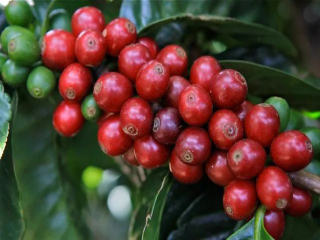
Liberica Coffee Bean knowledge: the characteristics of Liberian Coffee beans of the three original species of Coffee beans
Professional coffee knowledge exchange more coffee bean information please follow the coffee workshop (Wechat official account cafe_style) Liberica coffee, also known as big fruit coffee, some people mistakenly call Libyan coffee. It has a shorter cultivation history than the other two coffee trees, and the Liberian coffee tree is suitable for it.
Coffee cultivation techniques
Coffee, cocoa and tea are called the three major beverages in the world, and their output, consumption and output value all rank first. In addition to being used as a beverage, coffee can also extract caffeine and coffee oil; in medicine, it can be used as an anesthetic, stimulant and diuretic cardiotonic agent.
Medium coffee robusta coffee
Medium-grain coffee (Hainan Flora) Coffea canephora Pierre ex Froehn. In Notizbl. Bot. Gart. Berlin 1: 237. 1897 et in Engl. Bot. Jahrb. 25: 269. 1898; A. Cheval. Op. Cit. 186; A. E. Haarer, op. Cit. 17; Flora of Hainan 3: 349, figure 765. 1974; Atlas of higher plants in China 4:

The characteristics of Tanzanian Fine Coffee
Species of coffee beans in Tanzania, local coffee species: in the past, the coffee species commonly used in Tanzania are Bourbon (N.39) and Kents (KP 423). However, due to the low insect resistance and disease resistance of these two coffee varieties, the coffee quality can not meet the requirements of high-quality coffee, not to mention the world-famous UTZ and Fair trade certification. With the new technology of growing coffee beans

Varieties of coffee beans in Tanzania
Species of coffee beans in Tanzania, local coffee species: in the past, the coffee species commonly used in Tanzania are Bourbon (N.39) and Kents (KP 423). However, due to the low insect resistance and disease resistance of these two coffee varieties, the coffee quality can not meet the requirements of high-quality coffee, not to mention the world-famous UTZ and Fair trade certification. With the new technology of growing coffee beans

The species form, producing area quality and unique flavor of Colombian coffee
For the exchange of professional baristas, please follow the coffee workshop (Wechat official account cafe_style) Columbia Coffee introduction Open Classification: product Coffee National Cultural Beverage Colombian Coffee (Cafe de Colombia) is produced in Colombia and is one of the few individual coffees sold in the world under the name of the country. In terms of quality, it has won praise unmatched by other coffee.

A brief discussion on the perennial evergreen shrubs of the genus Coffee
1. Summary: coffee is a perennial evergreen shrub or small tree of Rubiaceae. It is native to tropical Africa and has been cultivated for more than 2000 years. The Arabs began to grow coffee in 525 BC, and it was popular for Arabs to stir-fry coffee beans. They began to grow coffee beans on a large scale after the 15th century, and were widely distributed in the tropics and subtropics of Europe, Asia, Africa and Latin America after the 18th century.

Introduction of Colombian Native species introduction of traditional washing treatment in Cascajero Manor
For the exchange of professional baristas, please follow the coffee workshop (Wechat official account cafe_style). This Excelso coffee comes from Cascajero Manor, which is one of the member farms of the Coocafisa Cooperative. It is located in the La Urraena district of Betulia, Antioquia, Colombia, at 1720 masl above sea level. Iwanda Rioyapes (Ivan Dario Yapes) cultivated
Varieties of coffee beans in Tanzania
Species of coffee beans in Tanzania, local coffee species: in the past, the coffee species commonly used in Tanzania are Bourbon (N.39) and Kents (KP 423). However, due to the low insect resistance and disease resistance of these two coffee varieties, the coffee quality can not meet the requirements of high-quality coffee, not to mention the world-famous UTZ and Fair trade certification. With the new technology of growing coffee beans

Katim coffee beans, Yunnan Katim species characteristics
Pay close attention to the coffee comment (Weixin Official Accounts vdailycom ) and find a good coffee shop to open its own shop Yunnan Arabica Coffee Bean Katim: A coffee variety cultivated by Portugal in 1959. As a hybrid with 75% Arabica bloodline and 25% high-quality Robusta bloodline, it not only inherits the excellent flavor and characteristics of Arabica, but also inherits Robusta's.

Introduction to the description and treatment of the Flavor of Tree species in Columbia Emerald Coffee Bean Manor
The flavor description method of Colombian boutique coffee beans introduces that the varieties of Colombian coffee are mainly small grains. Plants are small trees or large shrubs, 5-8 m tall, usually much branched at base; old branches gray-white, nodes dilated, young branches glabrous, compressed. Leaves thinly leathery, ovate-lanceolate or lanceolate, 6-14 cm long and 3.5-5 cm wide, tip long acuminate, acuminate part 10-15 long